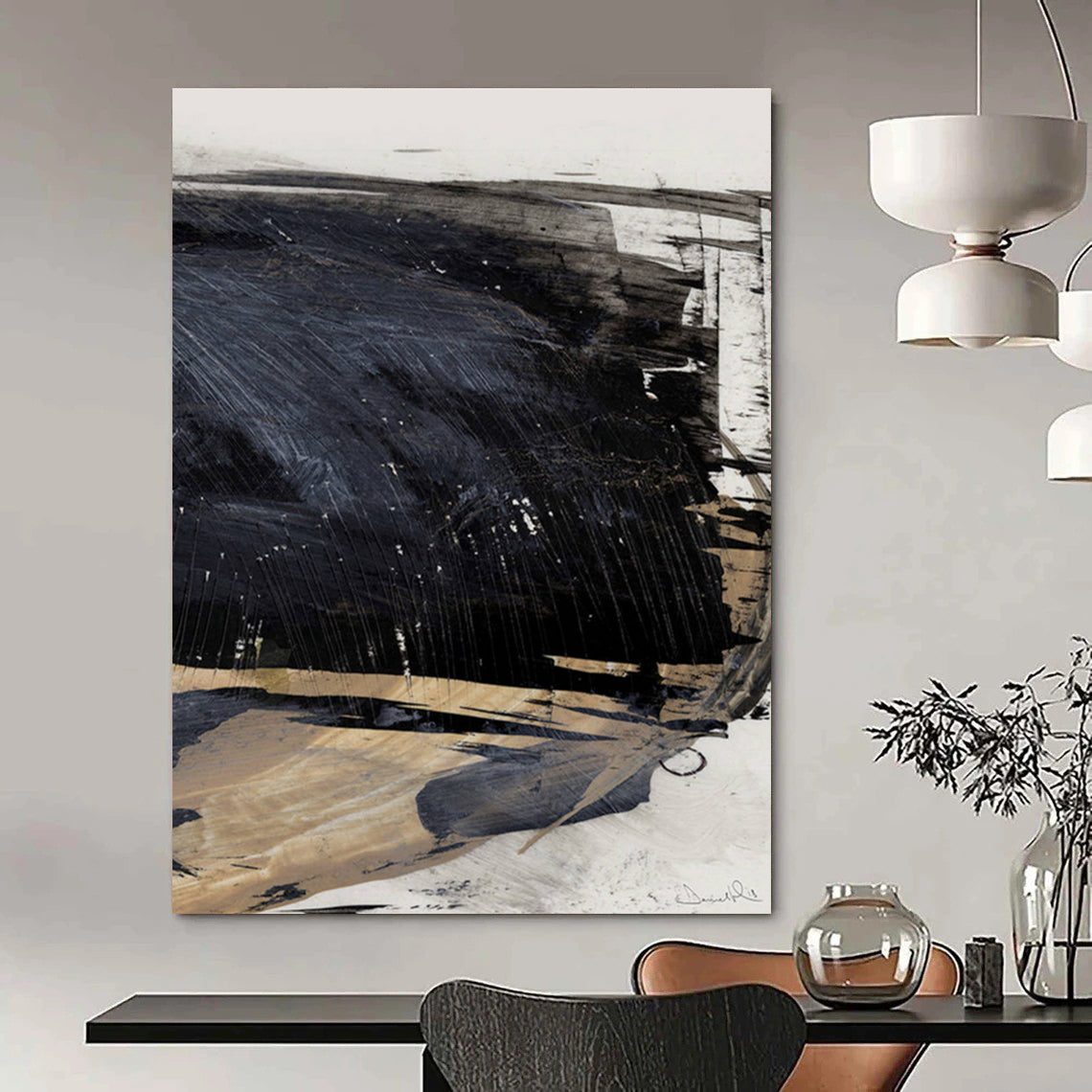

In the vast and ever-evolving landscape of contemporary art, few elements captivate the human spirit quite like the color green. Symbolizing growth, renewal, and the untamed forces of nature, green has long been a muse for artists seeking to transcend the boundaries of representation. At the heart of this exploration lies the mesmerizing realm of Green Abstract Painting, a genre that distills the essence of verdant hues into non-representational forms, textures, and compositions. This style, emerging from the broader abstract art movement, invites viewers to immerse themselves in layers of emerald, sage, and forest tones, evoking emotions ranging from serene tranquility to vibrant energy. Whether adorning the walls of modern homes or gracing gallery spaces, these paintings serve as portals to introspection, blending the organic with the ethereal in ways that challenge traditional perceptions of color and form.

The roots of abstract painting trace back to the early 20th century, when pioneers began to break free from the constraints of figurative art. Influenced by rapid industrialization and philosophical shifts, artists turned inward, prioritizing emotional expression over literal depiction. Green, with its associations to life and fertility, became a powerful tool in this arsenal. In the post-World War II era, Abstract Expressionism took center stage, where gestural brushstrokes and spontaneous drips captured the chaos of the human psyche. Artists like Jackson Pollock revolutionized the canvas with his all-over technique, often incorporating earthy greens to ground his explosive compositions. Pollock's drip paintings, such as those from the late 1940s, layered pigments in a rhythmic dance, where green emerged not as a mere background but as a vital force symbolizing rebirth amid turmoil. This movement's emphasis on action and intuition paved the way for green to be explored not just as a color, but as an emotional conduit.
Building on these foundations, the 1950s and 1960s saw the rise of Color Field Painting, a subset of abstraction where large swaths of color dominated the canvas, creating immersive experiences. Here, green took on a meditative quality, as seen in the works of Mark Rothko. Rothko's rectangular fields of color, often in deep greens hovering over softer tones, were designed to envelop the viewer, fostering a sense of spiritual elevation. His philosophy centered on the idea that color could evoke basic human emotions—tragedy, ecstasy, doom—without narrative crutches. In pieces like his untitled green canvases from the 1960s, the subtle gradients and blurred edges invite contemplation, mirroring the fluidity of nature's landscapes. This approach contrasted with the more rigid structures of Minimalism, where artists stripped art to its essentials, using green to explore purity and repetition. Figures like Agnes Martin employed faint green grids on vast whites, emphasizing subtlety and the infinite possibilities within constraint.
The symbolism of green in abstraction cannot be overstated. Drawing from cultural and psychological contexts, as detailed in explorations of Green in art, this hue has represented everything from envy and hope to environmental harmony. In abstract works, it transcends these associations, becoming a pure sensory experience. Contemporary artists harness green to comment on ecological themes, using abstract forms to highlight climate urgency without didactic imagery. For instance, layered textures in green abstracts might mimic the stratified earth, urging viewers to reflect on sustainability. The tactile quality—achieved through impasto techniques, where paint is applied thickly—adds depth, making the canvas a living entity that shifts with light and perspective.
Techniques in creating green abstract paintings vary widely, reflecting the artist's intent. Acrylics and oils are favored for their versatility, allowing for blending that captures the spectrum from lime to olive. Artists often start with a base layer, building up through glazing to achieve luminosity, or employ pouring methods for fluid, organic shapes. Texture plays a crucial role; palette knives scrape and build ridges, evoking mossy terrains or rippling leaves. In digital eras, some blend traditional methods with software, scanning hand-painted elements to manipulate greens into surreal abstractions. This fusion keeps the genre dynamic, appealing to collectors who seek pieces that resonate with personal spaces.
The appeal of green abstract painting extends beyond aesthetics into psychological benefits. Studies in color theory suggest green promotes balance and harmony, reducing stress in environments like offices or bedrooms. Hanging a large green abstract can transform a room, infusing it with vitality while maintaining a sophisticated edge. For interior designers, these works pair seamlessly with neutral palettes, adding pops of color without overwhelming. In galleries, they command attention, their ambiguity sparking conversations about interpretation—what one sees as a forest glade, another might view as emotional turbulence.
Historically, green's journey in art has been fraught with challenges. Pigments like verdigris, used since ancient times, were unstable, fading over time. Modern synthetics have resolved this, enabling vibrant, lasting greens that artists exploit in abstraction. This evolution mirrors broader art trends, from the Fauvists' bold greens to the Op Art movement's optical illusions in verdant tones. Today, emerging artists draw from global influences, incorporating African textiles' earthy greens or Asian ink traditions' subtle shades, enriching the abstract vocabulary.
Collecting green abstract paintings has become accessible, with online platforms offering curated selections. Enthusiasts appreciate the versatility—small pieces for accents, murals for statements. Prices vary based on size, medium, and artist reputation, but the emotional return is immeasurable. As one collector notes, a green abstract "brings the outdoors in, calming the soul amid urban chaos." This sentiment underscores the genre's enduring relevance in a fast-paced world.

In educational contexts, green abstracts teach about color dynamics and composition. Workshops encourage experimentation, mixing greens to discover personal palettes. Museums showcase retrospectives, linking past masters to current innovators, fostering appreciation for abstraction's role in cultural dialogue.
The therapeutic aspect cannot be ignored. Art therapy utilizes green abstracts to evoke healing, with participants creating their own to process emotions. The non-representational nature allows freedom, unburdened by perfectionism.
Looking forward, green abstract painting evolves with technology. Virtual reality experiences let viewers "enter" the canvas, exploring greens in immersive dimensions. Sustainable practices, using eco-friendly pigments, align with green's natural connotations, appealing to conscious consumers.
Ultimately, the allure of green abstract painting lies in its ability to connect the viewer to something primal yet profound. It strips away the superfluous, leaving a dialogue between color, form, and emotion. Whether contemplating Rothko's depths or Pollock's energies, these works remind us of art's power to renew and inspire.
FAQ
What defines a green abstract painting? A green abstract painting focuses on non-representational forms using various shades of green to evoke emotions and ideas rather than depicting real-world objects.
How do I choose the right green abstract painting for my space? Consider the room's lighting, existing colors, and desired mood—lighter greens for energy, darker for calm.
Are green abstract paintings suitable for all decor styles? Yes, they complement modern, minimalist, bohemian, and even traditional interiors with their versatile hues.
What maintenance do these paintings require? Dust gently with a soft cloth; avoid direct sunlight to prevent fading, and frame under UV-protective glass if possible.
Can I commission a custom green abstract painting? Many artists and platforms offer customization in size, shade, and texture to fit your vision.
How has green been historically significant in abstract art? Green has symbolized nature and renewal, evolving from unstable pigments to vibrant modern uses in expressing abstract concepts.