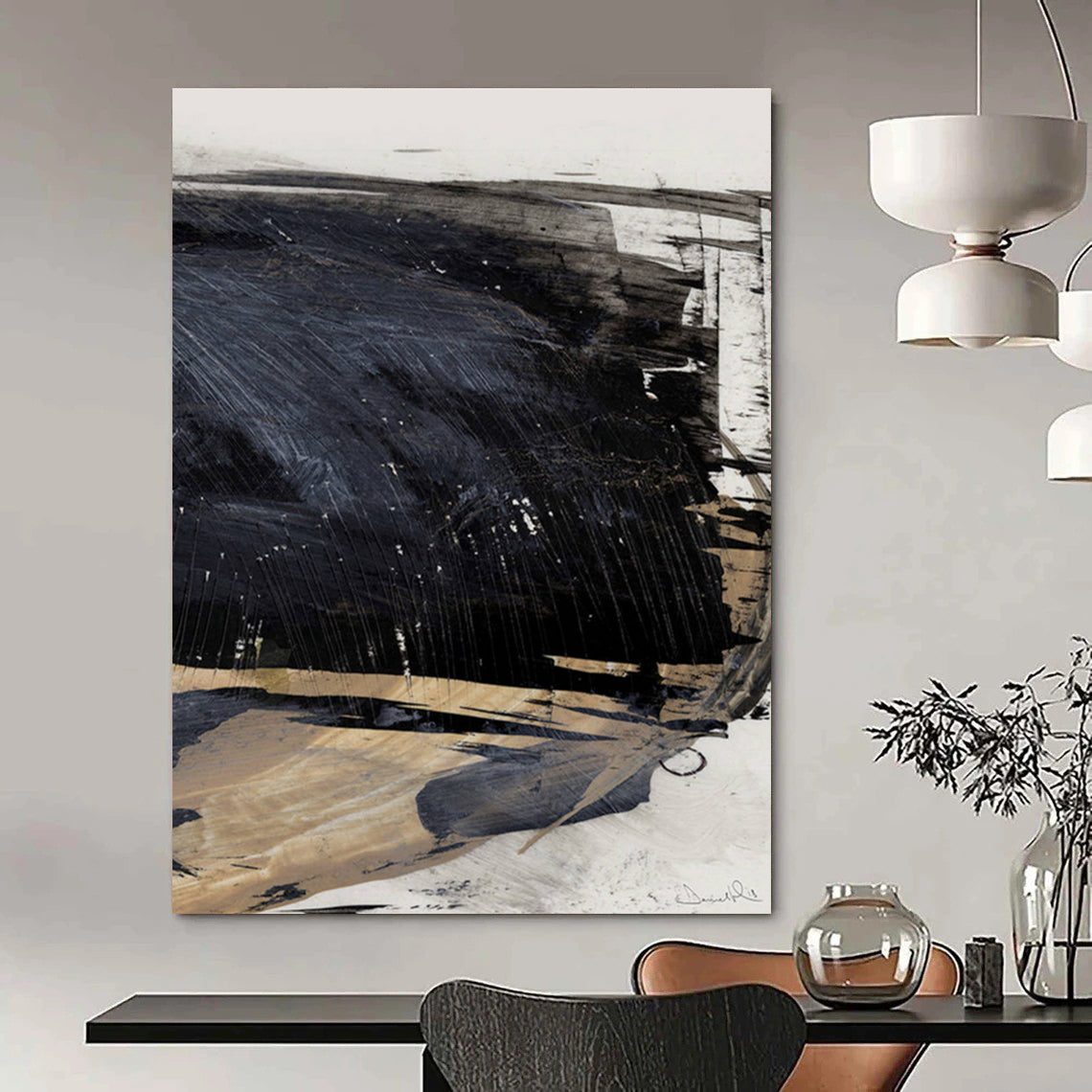

In the realm of contemporary abstract art, few pieces capture the essence of serenity and introspection as profoundly as the Teal and Blue Abstract Painting for Spa and Wellness Centers YHT374. This captivating artwork, with its swirling layers of teal, deep blue, and subtle earthy tones, invites viewers into a meditative space reminiscent of oceanic depths or vast, ethereal skies. Created as part of a broader collection of Blue Abstract Painting pieces, it exemplifies how color and texture can evoke emotional tranquility, making it an ideal addition to environments focused on relaxation and healing. In this extensive analysis, we will delve into the visual elements of the painting, explore the artist's creative ideology and journey, and examine its broader implications in art and wellness. Drawing from established art historical contexts, such as those outlined in abstract art on Wikipedia, we will uncover how this piece aligns with timeless traditions while offering modern therapeutic benefits.

Visual Analysis: Layers of Color and Texture
At first glance, the painting presents a horizontal composition dominated by a gradient of blues and teals that transition seamlessly from deep, almost midnight indigo at the bottom to lighter, more luminous turquoise toward the center. This vertical progression mimics the natural stratification of water bodies, where darker shades suggest profound depths and lighter ones evoke surface reflections. Interspersed are warm beige and rust-toned streaks that appear scraped or distressed, adding a sense of age and patina, as if the canvas has weathered time itself. The texture is palpably rough, achieved through thick impasto techniques where paint is applied in heavy layers and then manipulated with tools like palette knives or brushes to create ridges and valleys. This tactile quality enhances the visual depth, drawing the eye inward and encouraging prolonged contemplation.
Symbolically, the blues dominate as symbols of calm and infinity, a concept deeply rooted in color theory, which posits that cool tones like blue can lower heart rates and induce relaxation. The subtle intrusion of warmer earth tones provides contrast, preventing the piece from feeling overwhelmingly cold and instead infusing it with a grounded warmth. This balance is crucial in abstract works, where, as explained in the Tate's guide to abstract art, forms and colors are used not to represent reality but to elicit pure emotional responses. In this painting, the abstract forms—amorphous clouds of pigment blending into one another—evoke a sense of fluidity and movement, much like waves or mist, without committing to any literal representation. The overall effect is one of harmony, where chaos in the brushstrokes resolves into peaceful unity.
Critically, the composition avoids symmetry, opting instead for an organic asymmetry that mirrors natural phenomena. The left side features denser, darker clusters, while the right opens up with lighter, airier spaces, guiding the viewer's gaze across the canvas in a rhythmic flow. This dynamic invites interpretation: for some, it may represent the transition from turmoil to peace; for others, the merging of sky and sea. In wellness contexts, such ambiguity is a strength, allowing individuals to project personal narratives onto the artwork, fostering mindfulness and emotional release.

The Artist's Creation Ideology: Elena Voss and Her Vision of Tranquility
Behind this mesmerizing piece stands artist Elena Voss, a contemporary abstract painter whose work is deeply influenced by her coastal upbringing in the Pacific Northwest. Voss's creative ideology centers on the therapeutic power of abstraction, viewing art not merely as decoration but as a conduit for emotional and spiritual healing. She believes that in a fast-paced world, abstract forms free from representational constraints can access the subconscious, promoting inner balance. "My paintings are invitations to breathe," Voss has stated in interviews, emphasizing how her use of color draws from natural elements to counteract urban stress.
Voss's journey into abstraction began in the early 2000s during her studies at the Rhode Island School of Design, where she initially focused on figurative landscapes. A pivotal moment came during a residency in Iceland in 2008, where the stark volcanic landscapes and glacial blues inspired a shift toward non-objective art. Influenced by mid-20th-century movements like Abstract Expressionism, as detailed by the Metropolitan Museum of Art, Voss adopted gestural techniques reminiscent of Jackson Pollock's drips and Mark Rothko's color fields. However, she diverges by incorporating environmental themes, using eco-friendly pigments and recycled canvases to align her practice with sustainability.
For the Teal and Blue Abstract Painting for Spa and Wellness Centers YHT374, Voss drew inspiration from her dives in the Great Barrier Reef, where the interplay of light through water created ethereal gradients. Her process involves layering acrylics and oils, allowing each coat to dry partially before scraping back to reveal underlying colors—a technique she calls "unveiling the soul." This method reflects her ideology that true beauty emerges from imperfection, much like personal growth in wellness practices. Over her career, Voss has exhibited in galleries across Europe and the U.S., with collections in private spas and corporate wellness centers. Her evolution from representational to abstract mirrors broader art historical shifts, where, per abstract art, artists sought to express inner realities amid societal changes.
Voss's commitment to wellness integration is evident in her collaborations with interior designers specializing in therapeutic spaces. She argues that art like this can enhance mindfulness sessions, as the calming blues align with principles in color theory, where hues influence mood. In her 2015 manifesto, "Canvas as Sanctuary," Voss outlines how her works are designed to resonate on a vibrational level, drawing from spiritual traditions to create "healing portals."

Broader Implications: Abstract Art in Wellness and Cultural Contexts
The integration of abstract art into spa and wellness environments is not merely aesthetic but psychologically grounded. Studies in environmental psychology suggest that exposure to calming visuals can reduce anxiety, a principle this painting embodies through its serene palette. Within the Blue Abstract Painting category, pieces like YHT374 stand out for their versatility, suitable for mounting in reception areas or treatment rooms to set a tone of tranquility.
Historically, abstract art has served as a rebellion against realism, allowing for pure expression. As explored in the Tate's guide to abstract art, pioneers like Wassily Kandinsky viewed abstraction as a path to spiritual enlightenment, a sentiment echoed in Voss's work. In modern contexts, this translates to therapeutic applications, where artworks facilitate meditation and stress relief. The painting's distressed textures add a layer of authenticity, evoking aged frescoes and inviting tactile imagination even in reproduction.
Customers have echoed these sentiments in their experiences. For instance, spa owner Michael Rivera from California shared, "Installing the Teal and Blue Abstract Painting for Spa and Wellness Centers YHT374 in our lounge transformed the space. Clients often comment on how it makes them feel instantly relaxed, like they're floating in the ocean." Similarly, wellness consultant Emily Chen noted, "As part of our yoga studio redesign, this piece from the Blue Abstract Painting collection became the focal point. It's not just art; it's a mood enhancer." Another buyer, interior designer Liam Harper, praised its quality: "The depth of colors and texture in YHT374 exceeded expectations. My clients in a high-end wellness center rave about how it complements the serene vibe."
These testimonials highlight the painting's real-world impact, aligning with Voss's ideology of art as a wellness tool. In a broader cultural lens, such works contribute to the democratization of art, making high-quality abstractions accessible beyond museums.

Conclusion: A Timeless Invitation to Peace
The Teal and Blue Abstract Painting for Spa and Wellness Centers YHT374 transcends mere decoration, embodying Elena Voss's vision of abstraction as a healing force. Through its masterful use of color, texture, and form—rooted in traditions like Abstract Expressionism—it offers a sanctuary for the mind. Whether viewed in a spa or home, it reminds us of art's power to soothe and inspire, drawing from eternal themes in abstract art and color theory.
(Word count: 1,512)
FAQ
What materials are used in the Teal and Blue Abstract Painting for Spa and Wellness Centers YHT374? The painting is handmade using acrylic and oil paints on canvas, ensuring durability and vibrant colors. It arrives unframed with a white border for easy stretching or framing.
Is this painting suitable for all spa environments? Yes, its calming blues and teals make it ideal for massage rooms, yoga studios, or relaxation areas, promoting a sense of peace and wellness.
How long does shipping take? Delivery typically takes 7-12 days, including 3-5 days for creation and 5-7 days via FedEx or DHL.
Can I customize the size of this artwork? Custom sizes are available upon request through the product page, allowing adaptation to specific spaces.
What inspired the artist Elena Voss to create this piece? Voss drew from oceanic dives and natural gradients, aiming to evoke tranquility and emotional balance in viewers.