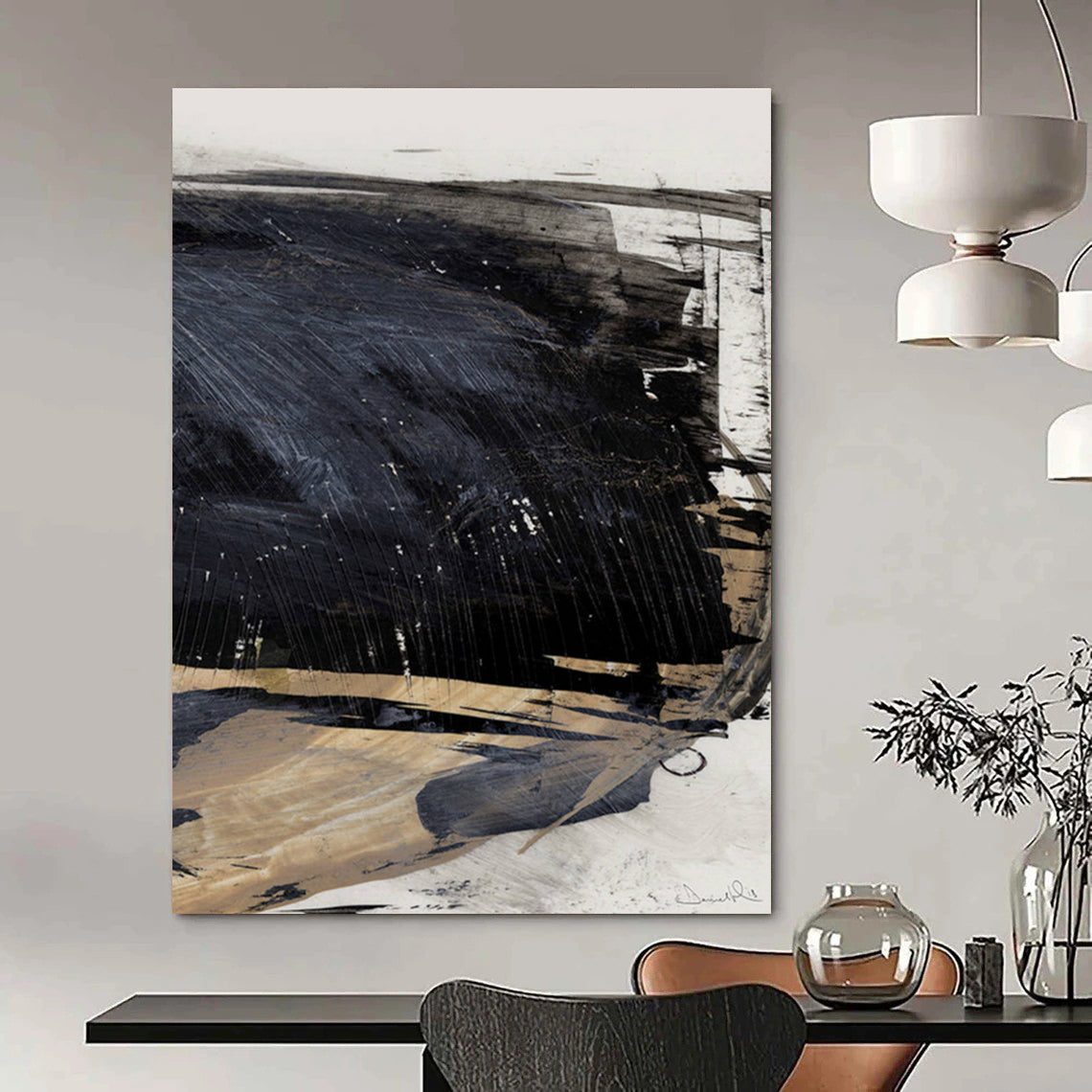

In the vibrant world of contemporary art, few elements captivate the human spirit quite like the color yellow. When infused into abstract forms, it transforms canvases into beacons of energy, optimism, and intellectual depth. Yellow Abstract Art embodies this fusion, offering pieces that radiate warmth and invite viewers into a realm where emotion and form intertwine without the constraints of realism. This genre, rooted in the broader tradition of abstract art, harnesses yellow's inherent brightness to evoke feelings ranging from joy to introspection. As we delve deeper, we'll explore the historical evolution, psychological impact, influential artists, and practical applications of yellow abstract art, revealing why it continues to illuminate modern spaces and minds.

The origins of yellow abstract art trace back to the early 20th century, a period when artists began breaking free from representational constraints. Abstract art as a movement sought to express the inexpressible through pure form, color, and line, often drawing inspiration from music, spirituality, and the subconscious. Yellow, with its associations to sunlight and vitality, became a pivotal hue in this exploration. Pioneers like Wassily Kandinsky, often hailed as the father of abstraction, integrated yellow into his compositions to symbolize spiritual awakening. In works such as "Composition VIII," Kandinsky used bold yellow accents against contrasting backgrounds to create dynamic tension, believing colors could resonate like musical notes. His theoretical writings, including "Concerning the Spiritual in Art," emphasized yellow's advancing quality—it seems to leap forward from the canvas, engaging the viewer on an emotional level.
Building on these foundations, the mid-20th century saw yellow abstract art flourish within Abstract Expressionism, a movement that prioritized spontaneous gesture and emotional intensity. Artists in New York, influenced by wartime turmoil and existential philosophy, turned to large-scale canvases where color became the primary vehicle for expression. Mark Rothko, a key figure in color field painting—a subset of Abstract Expressionism—employed luminous yellow fields in pieces like "No. 61 (Rust and Blue)" to evoke sublime experiences. Rothko's rectangles of color, often glowing with yellow undertones, were designed to envelop the viewer, creating a meditative space where the boundaries between art and observer dissolve. His use of yellow wasn't merely aesthetic; it was philosophical, aiming to convey the tragedy and ecstasy of the human condition through subtle gradations and layers.
Beyond these icons, yellow's role in abstraction is deeply tied to color theory, which posits that hues carry inherent meanings and interactions. In traditional color wheels, yellow stands as a primary color, symbolizing warmth, intellect, and enlightenment. When abstracted, it can dominate a composition, drawing the eye and influencing mood. Psychologically, yellow stimulates mental activity and fosters creativity, making it ideal for abstract works that challenge perceptions. Contemporary artists continue this legacy, experimenting with textures, mediums, and scales to push boundaries. For instance, digital abstractions incorporate yellow through gradients and pixels, blending traditional techniques with modern technology to create immersive experiences.

The appeal of yellow abstract art lies not only in its visual impact but also in its versatility for interior design. In homes and offices, these pieces serve as focal points, infusing spaces with positivity. A large yellow abstract canvas can brighten a minimalist living room, countering neutral tones with bursts of energy. Designers often pair such art with complementary colors like grays or blues to achieve balance, drawing on color theory principles to create harmonious environments. In commercial settings, yellow abstracts enhance productivity; studies suggest that exposure to yellow can boost innovation and alertness. Collectors appreciate the investment potential too—pieces from established abstract artists have seen appreciating values, making yellow abstracts both decorative and financial assets.
Exploring the creation process reveals the artistry behind yellow abstracts. Artists typically begin with a conceptual framework, perhaps inspired by nature's golden hues in sunsets or fields of wheat. Using acrylics, oils, or mixed media, they layer yellow pigments to build depth, employing techniques like dripping, splattering, or palette knife application for texture. The absence of figurative elements allows for pure expression; a swirl of yellow might represent joy, while a muted tone could evoke nostalgia. This freedom encourages experimentation, leading to diverse styles—from geometric precision to fluid chaos.
Culturally, yellow abstract art reflects societal shifts. In Eastern traditions, yellow symbolizes prosperity and earth, influencing abstract works in regions like Asia. Western abstractions, meanwhile, often tie yellow to modernism's optimism post-World War II. Today, amid global challenges, yellow abstracts offer solace, reminding us of light amid darkness. Galleries worldwide showcase these works, from New York's Museum of Modern Art to London's Tate Modern, where yellow-dominated abstracts draw crowds seeking emotional resonance.
For aspiring collectors, selecting yellow abstract art involves considering scale, style, and personal connection. Smaller pieces suit intimate spaces, while oversized works command larger rooms. Authenticity matters—opt for signed originals or limited editions from reputable sources. Maintenance is straightforward: avoid direct sunlight to prevent fading, and dust gently with a soft cloth. Integrating yellow abstracts into decor can transform mundane areas; hang one above a sofa for conversation starters or in a hallway for welcoming vibes.
The therapeutic aspects of yellow abstract art cannot be overlooked. Art therapy utilizes abstract forms to process emotions, and yellow's uplifting properties amplify this. Viewing or creating such art can reduce stress, as the color stimulates dopamine release. In educational settings, yellow abstracts teach about abstraction's history, inspiring students to explore their creativity.
As we consider the future, yellow abstract art evolves with sustainability in mind. Eco-friendly pigments and canvases reduce environmental impact, aligning with conscious consumerism. Virtual reality allows immersive experiences, where users "enter" yellow abstract worlds. This digital frontier expands accessibility, bringing high art to global audiences.
In essence, yellow abstract art transcends mere decoration—it's a conduit for emotion, intellect, and cultural dialogue. Whether through Kandinsky's spiritual visions or Rothko's contemplative fields, yellow invites us to see beyond the visible, embracing abstraction's boundless potential.
FAQ
What defines yellow abstract art? It is a genre of non-representational art that prominently features yellow hues to convey emotions, ideas, or sensations through form, texture, and composition.
How does yellow influence the mood of abstract art? Yellow evokes warmth, happiness, and energy, often making abstract pieces feel optimistic and invigorating, though it can also suggest caution or intensity depending on context.
Who are some famous artists associated with yellow in abstraction? Pioneers include Wassily Kandinsky and Mark Rothko, who used yellow to explore spirituality and emotional depth.
Where can I purchase yellow abstract art? Explore collections online or in galleries; sites like AbstrMural offer a variety of options tailored to different styles and spaces.
How should I display yellow abstract art in my home? Place it in well-lit areas to enhance its vibrancy, and pair with neutral walls for maximum impact.
Is yellow abstract art a good investment? Yes, works by established artists often appreciate in value, making it both aesthetically and financially rewarding.
(Word count: approximately 1520)