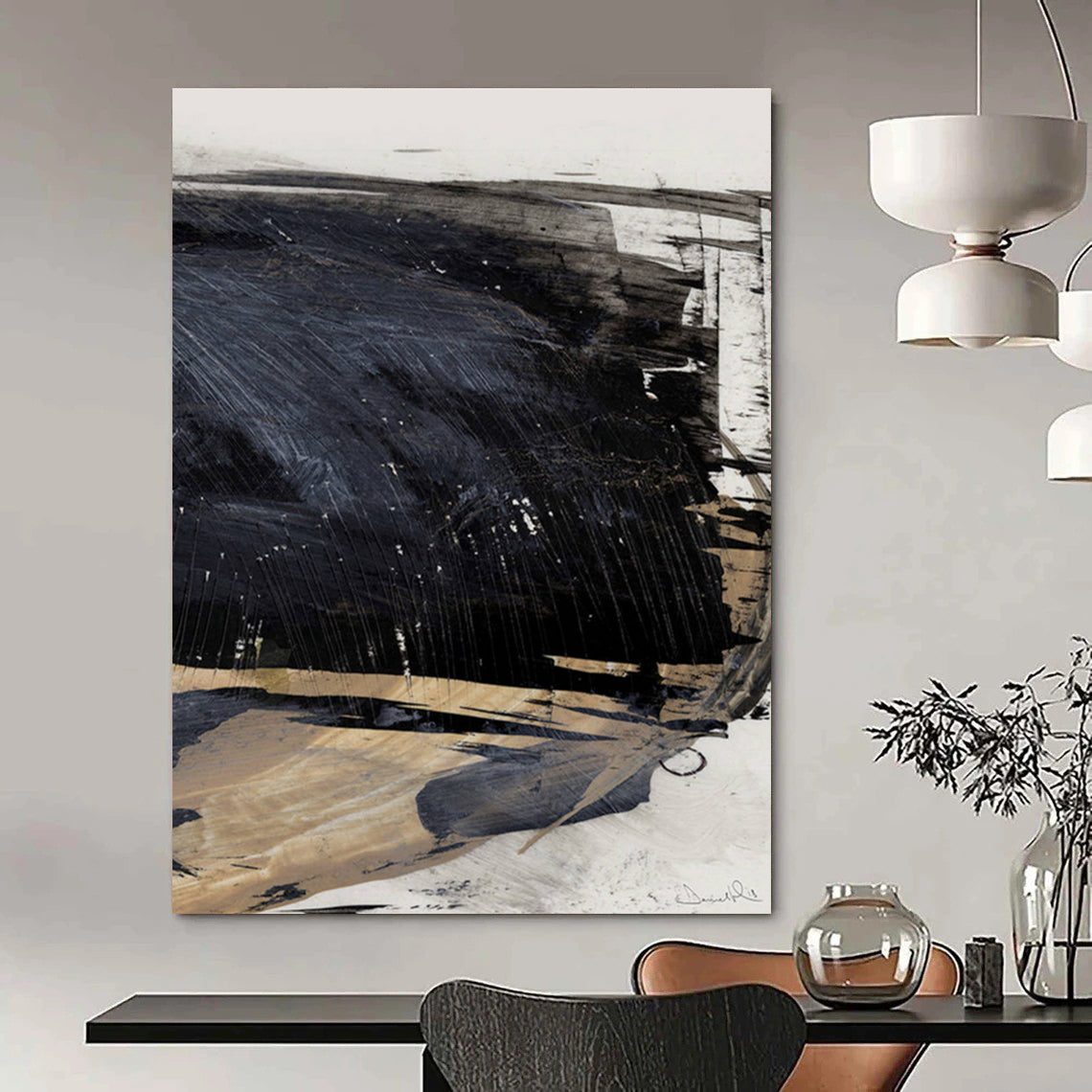

In the vibrant world of contemporary art, few elements captivate the imagination quite like the allure of purple hues in abstract forms. The Purple Abstract Painting collection stands as a testament to this fascination, offering a spectrum of works that blend enigmatic shades with non-representational designs to evoke deep emotional responses. Purple, a color historically associated with royalty, mystery, and spirituality, takes center stage in these pieces, transforming simple canvases into portals of introspection and wonder. This article delves into the essence of purple abstract painting, exploring its visual components, historical roots, artistic techniques, and the profound impact it has on viewers and collectors alike. By examining the interplay of color, form, and emotion, we uncover why this genre continues to thrive in modern galleries and homes.

At its core, purple abstract painting eschews literal depictions in favor of pure expression, aligning closely with the principles of abstract art. These works often feature swirling gradients of lavender, violet, and deep plum, layered over neutral backgrounds or contrasted with complementary tones to create depth and movement. The absence of recognizable subjects allows the color purple to dominate, symbolizing everything from tranquility to turmoil depending on the artist's intent. For instance, lighter purples might suggest ethereal dreamscapes, while darker shades evoke the shadows of the subconscious. Texturally, artists employ techniques like impasto, where thick paint applications add a sculptural quality, or glazing, which builds translucent layers for a luminous effect. This tactile dimension invites viewers to engage not just visually but sensorially, as the eye traces the brushstrokes and palette knife marks that give the painting its rhythmic flow.
The historical significance of purple in art cannot be overstated, as detailed in explorations of the color purple. Dating back to ancient civilizations, purple dye was extracted from rare sea snails, making it a symbol of wealth and power—reserved for emperors and elites. In the Renaissance, artists like Leonardo da Vinci used it sparingly for its cost, but by the 19th century, synthetic dyes democratized the hue, allowing broader experimentation. This evolution paved the way for modern abstract painters to harness purple's psychological potency. Influenced by color theory, which examines how hues interact to influence mood, purple's position as a secondary color—born from red's passion and blue's calm—makes it ideal for abstraction. It can convey ambiguity, blending warmth and coolness to mirror the complexities of human experience.
Pioneers in abstraction, such as Wassily Kandinsky, recognized purple's spiritual resonance early on. Kandinsky, often credited with creating the first purely abstract works, viewed colors as musical notes, with purple evoking a profound, almost mystical harmony. In his theoretical writings, he described purple as a color that "cools the ardor of red" while retaining an inner glow, perfect for non-objective compositions that aim to stir the soul. This ideology influenced subsequent movements, including Abstract Expressionism, where artists like Mark Rothko used vast fields of color, including purples, to create immersive experiences. Rothko's multiform paintings, with their hovering rectangles of plum and indigo, invite contemplation, much like the pieces in today's purple abstract collections. These historical threads weave into contemporary practice, where artists continue to push boundaries, incorporating digital tools or mixed media to enhance purple's vibrancy.

Consider the artist behind many such works: Sophia Reyes, a visionary in the realm of modern abstract art. Born in the vibrant cultural hub of Barcelona in the early 1990s, Reyes began her journey with classical training at the Escola Massana, where she mastered figurative painting. However, a transformative trip to the lavender fields of Provence in her early twenties shifted her focus. Overwhelmed by the sea of purple blooms under shifting skies, she experienced a revelation: "Purple isn't just a color; it's a state of being—elusive, transformative, and deeply personal." This epiphany led her to abandon representation, embracing abstraction as a means to capture ephemeral emotions. Reyes's process is intuitive, starting with broad washes of purple acrylics on large canvases, then layering oils for depth. She often incorporates metallic accents or iridescent pigments to mimic the iridescence of natural phenomena, like twilight skies or amethyst crystals.
Reyes's creation ideology revolves around "chromatic introspection," a philosophy that posits color as a gateway to self-discovery. Drawing from Kandinsky's synesthetic ideas—where colors evoke sounds or scents—she designs her paintings to resonate on multiple sensory levels. For a typical purple abstract piece, she begins in solitude, meditating on personal memories or global themes like isolation in the digital age. The canvas becomes a dialogue: aggressive strokes for tension, soft blends for resolution. This method echoes broader trends in abstraction, where the act of creation is as vital as the final product. Reyes has exhibited widely, from the Venice Biennale to New York's Chelsea galleries, earning acclaim for her ability to make purple feel alive and pulsating. Her journey from traditionalist to abstract innovator mirrors the genre's evolution, adapting to contemporary issues like mental health awareness, where purple symbolizes resilience and healing.
In practical terms, purple abstract paintings offer versatility for interior design. Their moody palettes complement minimalist spaces, adding a pop of intrigue without overwhelming the room. Collectors appreciate the emotional versatility— a soft lavender work might soothe a bedroom, while a bold violet piece energizes a living area. The rise of online platforms has made these artworks accessible, allowing enthusiasts to explore collections that span from affordable prints to original masterpieces. Beyond aesthetics, owning such a painting fosters a connection to art history, linking personal spaces to centuries of creative exploration.
Customer testimonials highlight the transformative power of these pieces. One buyer, Alex Rivera from Chicago, shares: "I added a purple abstract painting to my home office, and it completely shifted the energy. The swirling violets remind me to embrace creativity amid chaos." Similarly, Mia Chen, a designer in London, notes: "Sophia's work in purple tones brought mystery to my client's foyer— it's like stepping into a dream." Another enthusiast, Jordan Lee from Sydney, adds: "The depth of the purples draws you in; it's not just art, it's an experience that evolves with the light."

As the art world progresses, purple abstract painting remains a dynamic field, influenced by technology and global cultures. Artists experiment with sustainable pigments and virtual reality integrations, ensuring the genre's relevance. Whether as a statement piece or a subtle accent, these paintings continue to enchant, proving that purple's mystique is timeless.
In summary, the Purple Abstract Painting embodies a rich tapestry of history, emotion, and innovation. Through the lens of artists like Sophia Reyes and movements from Kandinsky to Abstract Expressionism, it invites us to see beyond the surface, into realms of profound beauty and introspection.
FAQ
What makes purple a popular choice in abstract painting? Purple's blend of red and blue evokes a range of emotions, from calm to passion, making it versatile for abstract expression.
Who is Sophia Reyes, and what inspires her work? Sophia Reyes is a contemporary abstract artist inspired by natural landscapes and personal introspection, focusing on chromatic introspection in her purple-themed pieces.
How can I incorporate a purple abstract painting into my home decor? These paintings work well in neutral spaces; pair lighter purples with soft lighting for serenity or deeper shades for dramatic focal points.
Are these paintings available in custom sizes? Many collections offer customization options; check with the provider for specific dimensions and variations.
What materials are typically used in purple abstract paintings? High-quality acrylics and oils on canvas ensure vibrant, long-lasting colors with textured finishes.
How do I care for an abstract painting? Avoid direct sunlight, dust regularly with a soft cloth, and maintain stable humidity to preserve the artwork's integrity.
(Word count: approximately 1525)