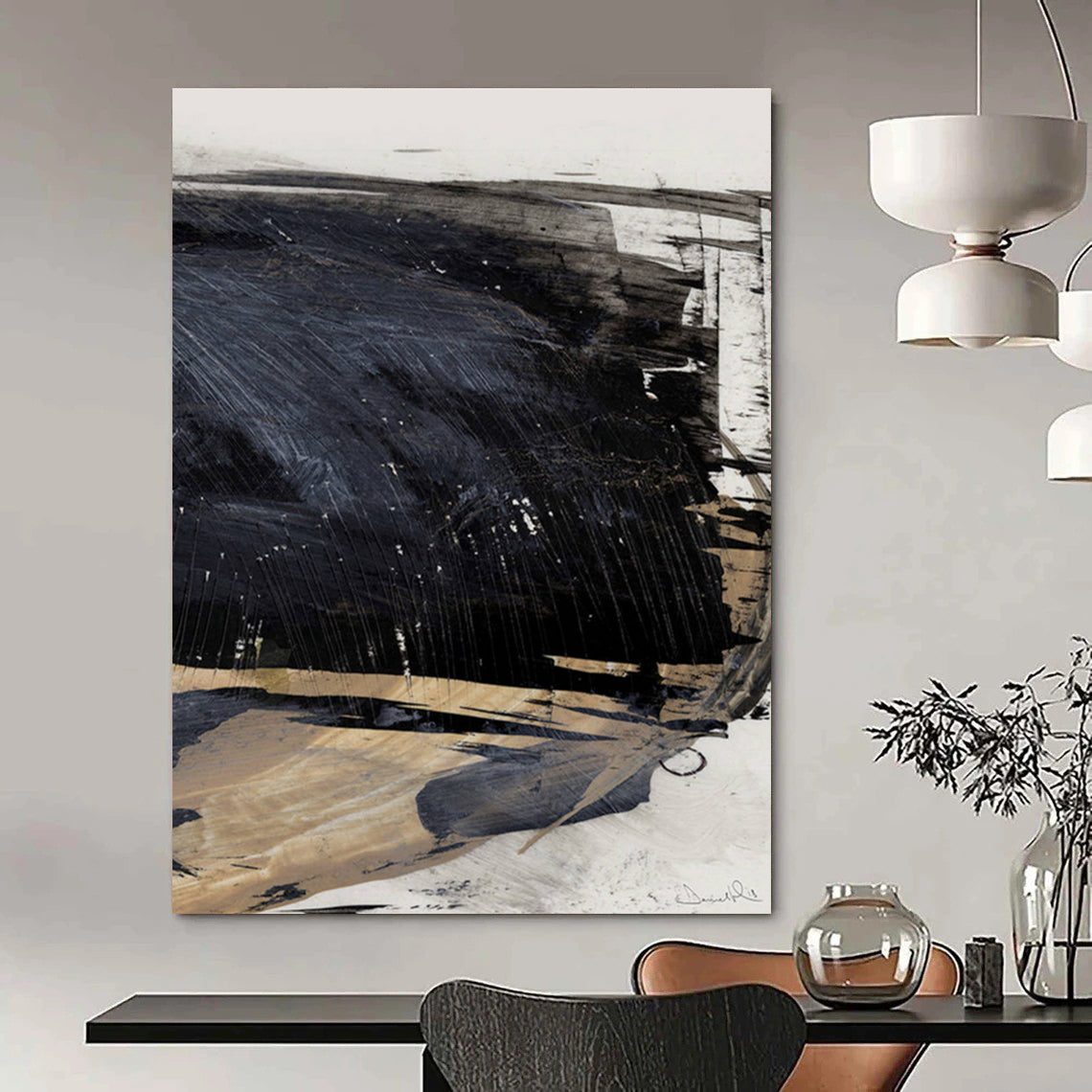

In the vast landscape of contemporary visual expression, Brown Abstract Art stands out as a captivating niche that blends earthy tones with non-representational forms to evoke a sense of grounded mystery and introspection. This style draws from the broader tradition of abstract art, where artists abandon literal depictions in favor of shapes, colors, and textures that speak directly to the viewer's emotions and subconscious. Brown, often associated with stability, warmth, and nature, serves as the dominant hue in these works, transforming simple canvases into profound statements that resonate in modern interiors and galleries alike. Whether it's the subtle gradients mimicking desert sands or bold strokes reminiscent of aged wood, this form invites us to explore the interplay between color and form in ways that transcend traditional boundaries.

The roots of Brown Abstract Art can be traced back to the early twentieth century, when pioneers like Wassily Kandinsky began experimenting with non-objective compositions. Kandinsky, a Russian artist and theorist, believed that colors and shapes could convey spiritual truths, much like music evokes feelings without words. His works, filled with swirling lines and vibrant palettes, laid the groundwork for abstraction, but it was the integration of earthy tones like brown that later artists used to ground these ethereal concepts. Brown, derived from mixtures of reds, yellows, and blacks, symbolizes reliability and resilience, qualities that make it a staple in abstract pieces aiming to connect viewers with the natural world. In today's context, collections featuring this style often highlight how brown can create depth and texture, turning a flat surface into a multidimensional experience.
As abstract art evolved through movements such as Cubism and Fauvism, the use of brown became more pronounced in post-war expressions. Artists sought to capture the raw essence of human experience amid global turmoil, and brown's muted sophistication provided a canvas for exploring themes of decay, renewal, and timelessness. For instance, in the realm of Abstract Expressionism, figures like Jackson Pollock revolutionized painting with his drip technique, where layers of paint—including earthy browns—created chaotic yet harmonious compositions. Pollock's approach, often involving splatters and pours, emphasized process over product, allowing brown to emerge as a stabilizing force amid vibrant chaos. This movement, centered in New York during the 1940s and 1950s, shifted the art world's focus from Europe to America, and brown abstract pieces from this era continue to influence contemporary designs.
What makes Brown Abstract Art particularly appealing is its versatility in aesthetic applications. Unlike brighter hues that demand attention, brown offers a subtle elegance that complements a variety of settings. In minimalist interiors, a large brown abstract canvas can serve as a focal point, its organic shapes echoing the curves of modern furniture or the grains of wooden floors. Designers often pair these works with neutral palettes—grays, beiges, and whites—to create serene environments that promote mindfulness and calm. The texture plays a crucial role here; many pieces incorporate mixed media, such as impasto techniques where thick layers of paint mimic the roughness of bark or soil, adding a tactile dimension that invites touch and closer inspection.
Delving deeper into the symbolism, brown in abstraction often represents the passage of time and the cyclical nature of life. Artists draw inspiration from landscapes—think arid deserts, autumn forests, or weathered rocks—translating these into non-figurative forms that evoke rather than illustrate. This approach aligns with the principles outlined in resources from institutions like the Tate, where abstract art is described as using visual language to achieve effects independent of reality. Brown's warmth can soften the starkness of geometric abstractions, making them more approachable for everyday collectors. In gallery settings, these works are curated to highlight contrasts: a deep chocolate brown against a lighter ochre background can create illusions of depth, drawing the eye inward and encouraging prolonged contemplation.

Contemporary artists continue to push the boundaries of Brown Abstract Art, incorporating digital tools and sustainable materials to refresh the genre. For example, some use recycled pigments or eco-friendly canvases to align with environmental themes, where brown symbolizes the earth's resilience. This evolution reflects a broader trend in abstraction toward inclusivity and accessibility, moving away from elitist galleries to online platforms where enthusiasts can discover and acquire pieces tailored to their spaces. The emotional impact cannot be overstated; studies in color psychology suggest that brown promotes feelings of security and comfort, making it ideal for therapeutic environments like home offices or meditation rooms.
One cannot discuss this style without acknowledging its role in interior design trends. In Scandinavian-inspired homes, brown abstracts add warmth to otherwise cool, minimalist aesthetics, balancing light woods and soft textiles. Bohemian spaces embrace the organic feel, layering brown pieces with plants and vintage finds for an eclectic vibe. Even in corporate settings, these artworks foster creativity and focus, their subtle complexity sparking innovative thinking without overwhelming the senses. Collectors often seek out limited-edition prints or originals that feature variations in tone—from caramel to espresso—allowing for personalized curation.
The creation process behind Brown Abstract Art is as intriguing as the final product. Artists typically begin with sketches, experimenting with color mixing to achieve the perfect shade of brown that conveys their intended mood. Techniques vary: some employ pouring methods reminiscent of Pollock, letting gravity dictate the flow, while others use brushes or spatulas for controlled abstraction. The goal is to evoke emotion through ambiguity, leaving interpretation open to the viewer. This democratic aspect of abstraction—where meaning is co-created—has contributed to its enduring popularity.
Historically, the integration of brown in abstract art gained momentum during the mid-century modern era, when designers like Charles and Ray Eames influenced visual culture with organic forms and natural materials. Abstract pieces in brown tones complemented furniture designs, creating cohesive living spaces. Today, this synergy persists in digital art forms, where algorithms generate brown-based abstractions for virtual galleries and NFTs, expanding accessibility beyond physical walls.
Critics and enthusiasts alike praise Brown Abstract Art for its timeless appeal. In a world saturated with digital stimuli, these works offer a respite, their earthy essence grounding us in the present. Galleries worldwide feature exhibitions dedicated to tonal abstractions, showcasing how brown can unify diverse artistic voices. From emerging talents in urban studios to established names in international fairs, the genre continues to evolve, incorporating influences from global cultures where brown holds symbolic significance—such as in African earth art or Asian ink traditions adapted to abstraction.
The market for such art has seen steady growth, with online collections making it easier for buyers to find pieces that resonate. Whether seeking a statement wall mural or a subtle accent, the variety ensures something for every taste. Artists often draw from personal narratives, infusing brown abstracts with stories of heritage, environment, or introspection, adding layers of depth that reward repeated viewings.
In essence, Brown Abstract Art encapsulates the beauty of simplicity and the power of subtlety. It challenges us to see beyond the surface, finding profound meaning in the interplay of color and form. As we navigate an increasingly complex world, these works remind us of the grounding force of nature, offering solace and inspiration in equal measure.
(Word count: 1528)
FAQ
What defines Brown Abstract Art? It is a style of non-representational art that primarily uses shades of brown to create compositions focused on shapes, textures, and emotions rather than literal subjects.
How can I incorporate Brown Abstract Art into my home decor? Pair it with neutral tones and natural materials for a cohesive look, such as in living rooms or bedrooms to add warmth and depth.
Who are some influential artists in abstract art using earthy tones? Pioneers like Wassily Kandinsky and Jackson Pollock have influenced the use of browns in abstraction through their innovative techniques.
Is Brown Abstract Art suitable for small spaces? Yes, its subtle palette can make rooms feel larger and more serene without overwhelming the area.
Where can I purchase Brown Abstract Art? Explore dedicated collections online for a wide selection of pieces in various sizes and styles.
What maintenance does Brown Abstract Art require? Keep it away from direct sunlight to prevent fading, and dust gently with a soft cloth for longevity.